
She and I are raffling off a signed copy of her book, Uncertain
Glory. All you have to do to be entered in the drawing is leave a comment
on this blog post. Good luck!
Lea Wait writes acclaimed historical novels
for children set in 19th century Maine. Stopping to Home, Seaward Born, Wintering Well, and Finest Kind are on recommended reading lists
throughout the country and have been named to student choice award lists in 13
states. Lea also writes the Shadows Antique Print Mystery series for adults, the most
recent of which is Shadows on a Cape Cod Wedding.
Today,
she’s here to speak about her latest historical novel for young people, Uncertain Glory.
Thirteen
year old Joe Wood has always dreamed of being a newspaper man. When a distant
cousin dies and leaves him a printing press, Joe borrows money to start his own
newspaper. But now his loan is almost due, and he doesn’t have enough to pay it
back. Will special editions about the growing hostilities between the North and
South keep Joe’s newspaper afloat? What about Nell, the young spiritualist
who’s come to town advertising that she can communicate with the dead? Joe’s
friend and partner, Charlie, is looking for a way to debunk her. But Joe isn’t
so sure she’s a fake. And when his assistant, the young African American boy
Owen, goes missing, Joe turns to Nell for help.

I like to mix real and fictional
characters in my historical novels. Joe Wood really did publish his town’s
newspaper during the mid-19th century. His mother ran a local dry
goods store. His friend Charlie, also a “real person,” helped him with the
paper, but was a bit flakier and unfettered … so I described him that way. (I
include historical notes explaining what Joe’s and Charlie’s future lives were
like.) Nell, a 12-year-old spiritualist, is based on a number of child
spiritualists of the period, including the Fox sisters. There were free black
families in Maine in 1861, and, although Owen is fictional, because of his
race, he’s able to give a different perspective on the beginning of the Civil
War.
How
much of the real Joe Wood is in Joe the character? What did you invent about
him? Can you tell us a little about your process of turning an historical
figure into a book character?
Yes – Joe is real! I’ve read his
diaries and think I have some idea of what kind of a young man he was. I knew I
wanted to center a book on him and his newspaper … and originally set the book
in the winter of 1859, which was the year he began publishing. Charlie and Nell
were also in that first version. But I realized I needed more depth to their
story … so I changed history a bit and set UNCERTAIN GLORY in April of 1861,
during the first two weeks of the Civil War.
Joe
is torn between the demands of his newspaper and helping his mom with the family
store. His father hasn’t been much use since Joe’s brother died. How does this
theme of family responsibility and grief fit in with the rest of your novel?
Are any parts of the novel drawn from your personal life?
Joe’s mother really did run a dry goods
store. In the late 1850s – early 1860s she supported the family. Historically,
Joe’s father was a minister in a small church which closed, leaving him without
a profession. In UNCERTAIN GLORY I have him depressed and not contributing to
the family, but in the book I blame his depression on his feeling responsible
for the death of Joe’s (fictional) older
brother. I thought that would be easier for young readers to understand … and his
reaction to Nell also explains why many people were attracted to the messages she
brings.
Luckily, I haven’t had to cope with
the problems Joe and his family had.
How
do find ideas for your historical novels for kids? Do you scour historical
records looking for interesting individuals? Or do you begin with an era or
theme?
All my historicals for children (so
far) are set in 19th century Wiscasset. I wanted to take one town
and show, through a series of stand-alone books, how the geography of a town
may stay the same, but the
 way people live there changes over the years.
Usually I start with one idea and then build on it. STOPPING TO HOME? (1806 –
Wiscasset was the largest port east of Boston, and there was a smallpox
epidemic.) SEAWARD BORN (A devastating
hurricane in 1804 Charleston, SC, nearby plantations changing from rice
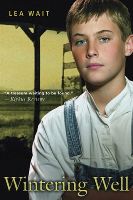
cultivation to cotton, and 20% of American mariners were African American). WINTERING
WELL (1819-1820. Maine becomes a state … and what role was there in the 19th
century for a disabled boy/man?) FINEST
KIND (the Wiscasset Jail burned, and 2
school boys got the jailer’s family and the prisoners out and saved them) Those were the beginnings …
way people live there changes over the years.
Usually I start with one idea and then build on it. STOPPING TO HOME? (1806 –
Wiscasset was the largest port east of Boston, and there was a smallpox
epidemic.) SEAWARD BORN (A devastating
hurricane in 1804 Charleston, SC, nearby plantations changing from rice
cultivation to cotton, and 20% of American mariners were African American). WINTERING
WELL (1819-1820. Maine becomes a state … and what role was there in the 19th
century for a disabled boy/man?) FINEST
KIND (the Wiscasset Jail burned, and 2
school boys got the jailer’s family and the prisoners out and saved them) Those were the beginnings …
I do a lot of work in small town Maine archives!
So
far, all your historical novels for kids are at least partially set in Wiscasset. How can you come up with so many stories from one
small town? Do you ever think you’ll run out of material? If you had to set a
novel somewhere else, where might it be?
All
small towns are full of stories. I have one Wiscasset book that hasn’t sold
yet, and I could continue in Wiscasset for a while, but I’d also like to write
a book or three set in the 20th century … it all depends on my time
(never enough of that!) and, honestly, which books are selling. I wrote a book for young people set in
Edinburgh, Scotland in 1838 that I still think is one of my best … but it
hasn’t sold. So the market is important.
I love the fact that you have recipes from your
books on your website. (I made Cassie's Anadama Bread for dinner last night.) You don’t have one up from Uncertain Glory yet. If you did, what might it be?
Good
question! Probably a stew … Joe’s mother seems to cook those quite often!
Few writers are able to successfully write for
both children and adults, yet you also write adult mysteries. Which audience
did you write for first? What compelled you to jump to a new readership? How
does the process of writing for adults differ from writing for young people?

Can you tell us anything about your upcoming
projects?
Let’s
see! The 7th in my Shadows Antique Print mystery series (SHADOWS ON
A MAINE CHRISTMAS) will be published in early September. The first in a new
contemporary Maine series based on a business of custom needlepoint and
restoration (the Mainely Needlepoint) series will begin in January, 2015, with
TWISTED THREADS. Right now I’m writing the second in that series, THREADS Of
EVIDENCE. And for children? I’ve written another Wiscasset book, set in 1777,
and I’m working on a book set in New Jersey in 1970 with the background of the
Vietnam War and women’s liberation.
For any teachers out there, Lea has a Teacher’s
Guide for Uncertain Glory available
on her website. For more information on Lea Wait and her books, see www.leawait.com


